
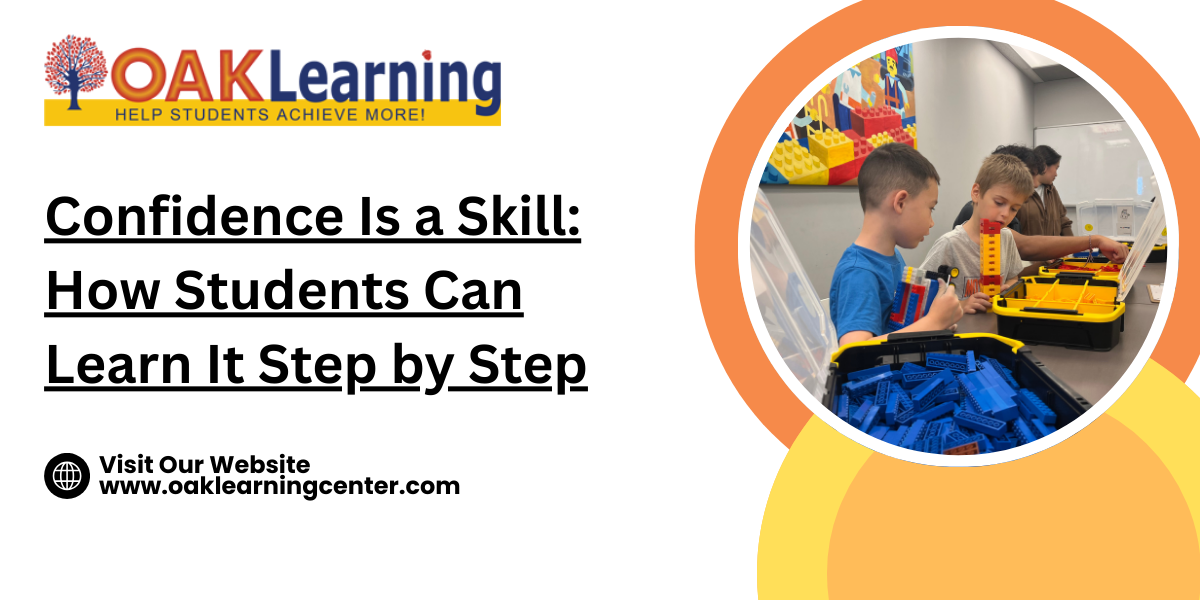
Confidence Is a Skill: How Students Can Learn It Step by Step

Introduction: Why Confidence Matters More Than Ever
As parents, we all want our children to succeed—not just academically, but in life. One of the biggest predictors of success isn’t test scores or grades, but confidence. Confidence determines whether a student speaks up in class, takes on leadership roles, or embraces challenges without fear of failure. The good news? Confidence isn’t something children are born with or without—it’s a skill that can be learned, strengthened, and practiced over time.
At OakLearning Center, we’ve seen firsthand how structured growth opportunities transform students from hesitant to self-assured. Through our I-Path: A Self Development program for kids, students gradually discover their strengths, define their goals, and learn to deliver with confidence in real-world settings.
Why Treating Confidence as a Skill Changes Everything
Many parents assume confidence is a personality trait—something a child either “has” or doesn’t. But research shows otherwise. According to a 2023 report from the American Psychological Association, children who actively practice skills like public speaking, goal setting, and self-awareness show significant gains in long-term confidence levels compared to peers who rely solely on natural personality traits.
By treating confidence like math or music—something that can be taught, practiced, and improved—parents and educators can open the door to lifelong resilience and success.
Step 1: Discover – Building Self-Awareness Early
Confidence starts with self-awareness. A child who understands their strengths and interests feels more secure in taking on challenges. For middle schoolers, this means exploring different activities—debate clubs, science fairs, art projects—to see where they shine.
Parent Tip: Encourage your child to reflect on what excites them. Ask questions like, “What activity makes you lose track of time?” or “Which school project made you feel proud?”
At OakLearning Center, the I-Path program begins with the Discover phase, where students uncover their unique traits and align them with goals such as DECA competitions, debate teams, or creative pursuits.
Step 2: Define – Turning Confidence Into Strategy
Once students know themselves, the next step is learning how to channel their strengths into concrete goals. Defining confidence involves structured thinking, clear communication, and problem-solving skills. High school students, in particular, benefit from setting goals related to career interests, extracurricular leadership, or university admissions.
Parent Tip: Help your child create a simple goal-setting plan. Break down a large dream—like winning a debate competition—into smaller, manageable steps such as researching arguments, practicing speeches, and seeking feedback.
Programs like OakLearning’s Tech Path for Kids also nurture confidence by combining technology skills with problem-solving, ensuring students feel equipped to face future challenges.
Step 3: Deliver – Practicing Confidence in Real Situations
Confidence becomes real when students step into practice environments. Mock interviews, presentations, or simulated competitions help children manage nerves, refine their skills, and perform under pressure. University students and young adults especially benefit from these “practice rounds” before internships or job interviews.
Parent Tip: Create opportunities for your child to present at home. Whether it’s explaining a book they read, teaching a sibling, or presenting a family project, practice helps reduce stage fright and boost self-assurance.
OakLearning’s I-Path program culminates in a mock DECA-style competition, giving students real-world feedback and helping them walk away with sharpened presentation skills and lasting confidence.
Storytelling: A Parent’s Perspective
“My daughter was always bright, but painfully shy,” recalls a Toronto parent whose child joined OakLearning’s program. “She wouldn’t raise her hand in class, even when she knew the answer. After going through the I-Path journey, I saw a transformation. She started volunteering for school projects, competed in DECA, and most importantly—she believed in herself.”
This isn’t an isolated story. Teachers frequently report that students who engage in structured self-development programs not only perform better academically but also show stronger resilience when facing setbacks.
FAQs About Confidence as a Skill
1. Can shy kids really become confident?
Yes. Shyness doesn’t define a child forever. With gradual exposure to supportive environments, many children learn to manage shyness and grow in confidence.
2. How long does it take to build confidence?
Just like learning piano or math, confidence develops over time. Structured programs, practice, and positive reinforcement can lead to noticeable changes in as little as 8 weeks.
3. How do I know if my child needs confidence support?
If your child avoids challenges, hesitates to speak up, or feels overwhelmed by competitions, confidence coaching can help. Look for small signals—like reluctance to join group activities—that indicate your child could benefit from extra support.
Conclusion: Helping Your Child Step Into Confidence
Confidence is not a gift reserved for a lucky few—it’s a skill every child can learn. By nurturing self-awareness, setting clear goals, and encouraging real-world practice, parents can help their children grow into resilient, capable, and self-assured individuals.
If you’re ready to guide your child on this journey, explore the I-Path: A Self Development program for kids at OakLearning Center. With structured mentorship, small group focus, and real-world readiness, it’s designed to help students discover, define, and deliver their best selves.
Call us at (289) 725-7700 to learn how we can support your child’s journey toward lasting confidence.