
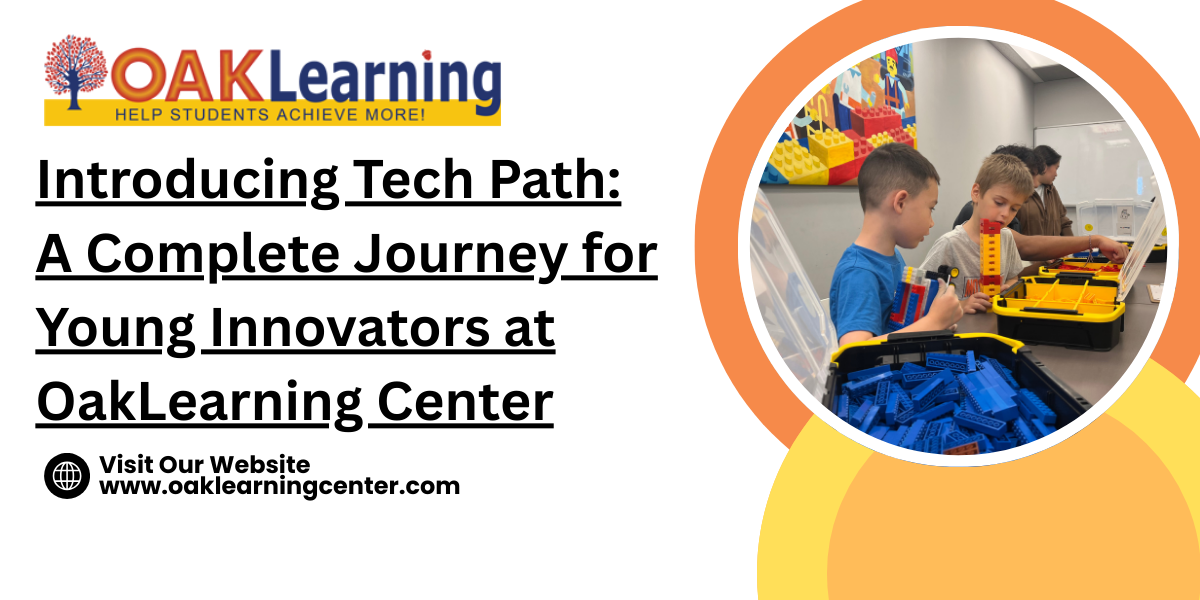
Parent guide: How a balanced after-school pathway in Robotics, Coding, and Self-Development (i-Path) helps kids grow real-world confidence and reduces Summer Learning Loss.
Introducing Tech Path: A Journey for Young Innovators
At its heart, OakLearning Center designed Tech Path to answer a practical question many parents ask: “How can my child enjoy learning after school and still build skills that really matter?”
Tech Path brings three complementary tracks under one roof so families can customize the path to fit a child’s interests and pace:
- Robotics: Hands-on building, sensor logic, and basic automation — kids design, assemble, and code robots while strengthening spatial reasoning and math thinking.
- Coding: From visual coding to Python/JavaScript — learners create animations, mini-games, apps, and simple data projects that grow logic and persistence.
- i-Path (Self-Development): Guided practice in public speaking, leadership, collaboration, and growth mindset — the human skills that power academic and career success. (Learn more about i-Path.)
Unlike single-focus programs, Tech Path lets you choose one track, blend two, or take all three. That flexibility means fewer logistics for parents and a richer, more connected experience for kids.
Why Parents Need to Rethink After-School Time
After-school hours are powerful — they can either become passive screen time or a launchpad for curiosity. Families often try to patch the gap with tutoring, sports, or clubs. Those all have value, but modern learners also need a mix of STEM fluency and communication confidence. That’s where integrated pathways shine.
What Is Summer Learning Loss — and Why It Still Matters?
Summer Learning Loss describes the academic slide many children experience when long breaks interrupt practice. Studies commonly report losses of two months of math skills and measurable dips in reading and problem-solving when children disengage for extended periods. Over multiple years, those gaps compound, making each September feel like “catch-up.”
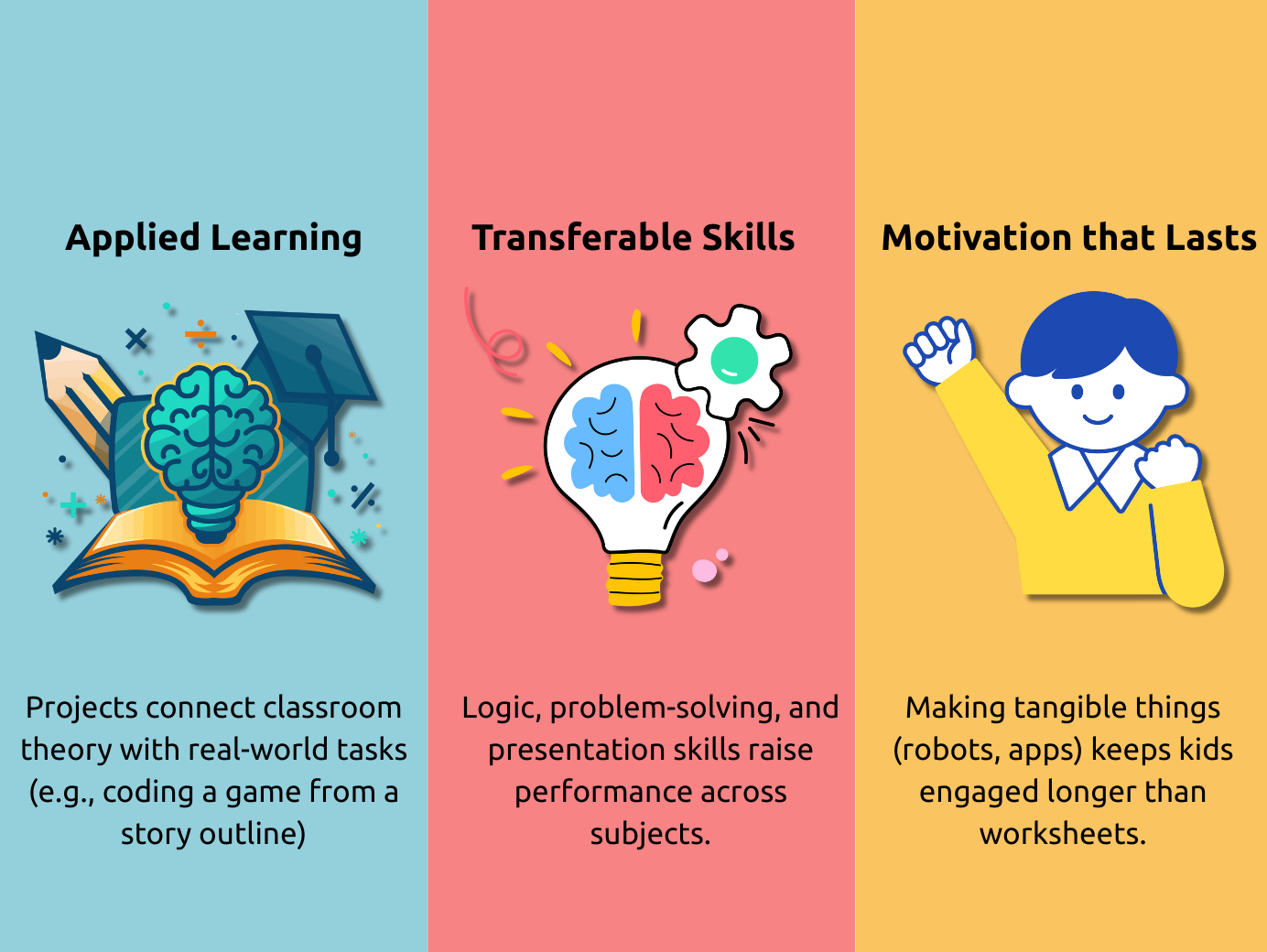
The good news: consistent, enjoyable practice — especially hands-on projects — reduces the slide. Robotics challenges keep math reasoning fresh (measurement, angles, rates), coding sustains reading and logic, and i-Path keeps communication muscles active through storytelling and short talks.
Inside Tech Path: How Each Track Builds Skills That Stick
Robotics: Turning Curiosity Into Engineering Thinking
- Build → Code → Test → Improve: Kids assemble mechanisms, connect sensors, and iterate — learning resilience through safe trial-and-error.
- STEM in action: Ratios (gear trains), geometry (turn angles), data (sensor thresholds) become tangible, not abstract.
- Teamwork: Paired builds and “design reviews” foster collaboration and constructive feedback.
Why parents like it: robotics makes math visible. Children see why precision matters when a robot veers off course by a few degrees.
Coding: From Playful Projects to Real-World Logic
- Start simple: Visual coding (Scratch/Blockly) for story games and animations.
- Grow depth: Python/JavaScript for simple apps, data visualizations, or hardware control.
- Transfer: Planning, debugging, and clear naming habits improve writing and study skills.
Why parents like it: coding builds patience and problem-solving. Kids learn to break big tasks into smaller, winnable steps.
i-Path: Confidence, Communication, and Leadership
- Micro-talks: 60–90 second speaking reps with structure (hook → idea → example → close).
- Peer feedback: Kind, specific notes (what worked / what to try) build growth mindset.
- Leadership games: Low-stakes team roles (facilitator, scribe, timekeeper) rotate weekly.
Why parents like it: i-Path helps shy learners participate and confident learners listen better — both are wins in group work and presentations.
Program Snapshot: Flexible by Design
| Item | Details |
|---|---|
| Duration | 3 Months of immersive learning |
| Tracks | Robotics, Coding, i-Path (pick one, two, or all three) |
| Schedule | 3 days per week, hands-on activities each class |
| Class Size | Small groups (up to 8 students) for coaching and collaboration |
| Certification | Completion certificate recognizing track achievements |
| Enrollment | New cohorts begin September 2025 |
| Location & Info | See Tech Path at OakLearning Center |
Parents choose the pathway: Some begin with Robotics for maker-energy, then layer Coding. Others start with i-Path to warm up confidence before tech tracks. There’s no one right order — only the order that keeps your child curious.
What Parents and Teachers Notice (A Short Story + Classroom View)
A Parent’s Week-by-Week View
Week 1: “My Grade-4 daughter built a line-following robot and explained why too sensitive sensors make it ‘twitchy.’ She started using words like threshold and calibration at dinner.”
Week 4: “She pitched a 90-second talk about ‘fixing bugs’ and used a real example from Scratch. She smiled when classmates clapped — she usually hides during presentations.”
Week 8: “She and two friends built a ‘delivery bot’ prototype. They divided roles, wrote a plan, and asked for a second iteration. I’m seeing confidence and better homework focus.”
A Teacher’s Perspective
- Transfer: Students who tinker with robotics and code tend to show stronger multi-step reasoning in math and science labs.
- Communication: Short, frequent speaking practice carries over to clearer explanations in class.
- Self-management: Iteration teaches “not yet” thinking — they try again without melting down.
Practical Tips to Reduce Summer Learning Loss (and Keep Joy High)
- Anchor learning to a project: Build a robot pet feeder, code a birthday card app, or record a 2-minute “tech explain” video each week.
- Use the 20-40-20 pattern: Warm-up (20%) → Focus build/code (40%) → Share or reflect (20%) → Free explore (20%). The share step cements learning.
- Celebrate small wins: Stickers or a “demo day” at home beat big rewards. Motivation grows from progress, not prizes.
- Pair reading with making: Read a science article, then create something related (a mini-simulation or a cardboard prototype).
- Keep reps short and regular: Two 45–60 minute sessions a week outrun a single marathon session.
Prefer guided structure? Explore Tech Path cohorts or browse OakLearning Center to see which schedule fits your family calendar.
What Makes Tech Path Different (and Parent-Friendly)
Integrated skills
STEM + People Skills: Robotics and Coding build logic; i-Path grows presence. Together they form a rounded learner ready for group work, fairs, and future interviews.
Flexibility
Flexible tracks & pacing: Choose one, stack two, or do all three. Adjust difficulty so challenge stays in the “sweet spot.”
Small group coaching
Small groups (up to 8): Enough peers for collaboration; small enough for coaching, questions, and safe experimentation.
Project portfolio
Portfolio artifacts: End each module with something to demo — a robot video, a live app link, or a short talk outline. Kids love showing proof of progress.
Skills & Impact You Can Expect
- Technical: Sensor logic, sequencing, debugging, algorithmic thinking, and basic data sense.
- Academic transfer: Better multi-step reasoning in math/science and clearer written explanations.
- Personal growth: More willingness to try, iterate, and speak — key ingredients for long-term confidence.
Parents often report improved homework focus and more positive self-talk (e.g., “I haven’t solved it yet — I’ll try a different approach.”). Those are big green flags for resilience.
Frequently Asked Questions
1) What ages is Tech Path suitable for?
Ideal for ages 5–15. Activities scale by age and experience. Younger learners start with visual coding and simple builds; older learners take on structured challenges with more autonomy.
2) How exactly does Tech Path reduce Summer Learning Loss?
Kids keep practicing skills that typically slide during long breaks — mental math (robotics measurements), reading/logical reasoning (coding steps), and communication (i-Path mini-talks). Consistency beats cramming.
3) Can my child join only one track?
Yes. Choose Robotics, Coding, or i-Path. Many families start with one and add another once their child finds momentum.
4) Do we need prior experience or special equipment?
No. Materials and learning kits are provided during sessions. Beginners are welcome and supported.
5) How big are the classes and who teaches them?
Up to 8 students per group, guided by educators experienced in Ontario-aligned STEM and youth communication coaching.
6) Will this help with school grades?
Grades typically improve when confidence and study skills grow. Tech Path focuses on transferable abilities — planning, precision, and reflection — which support classroom performance.
7) Where can I learn more about the self-development track?
See i-Path at OakLearning Center for an overview of communication, leadership, and growth-mindset routines.
Ready to Explore a Path That Sticks?
Whether your goal is to prevent Summer Learning Loss, build confidence for classroom presentations, or unlock STEM curiosity, an integrated pathway can make after-school hours count. If you’d like a structured, encouraging environment with small groups and real projects, take a look at Tech Path cohorts and schedules.
Or start at the homepage to see everything we offer at OakLearning Center.