
Summer break brings joy to kids and a bit of anxiety to parents. After months of school routine, bedtimes stretch, screen time increases, and schoolwork can get pushed aside.
While July and August are filled with adventures, they can also cause an issue known as Summer Learning Loss. When children are away from structured learning for 6–8 weeks, they often forget important math, reading, and writing skills. The result? September can feel frustrating for both children and parents.
This guide explains why summer learning loss happens, how it affects kids, and practical ways to prevent the dreaded back-to-school shock. Whether you’re a working parent, stay-at-home caregiver, or a teacher, you’ll find flexible, low-pressure strategies to keep children engaged while preserving the joy of summer.
Why “Back to School Shock” Is Real
Teachers commonly hear: “He knew this in June—why is he struggling now?” or “We’re barely two weeks into school and she’s already behind!” The transition from relaxed summer days to classroom expectations can be jarring—and it’s not just emotional; it’s cognitive.
Research (for example, findings summarized by NWEA and other education studies) shows that:
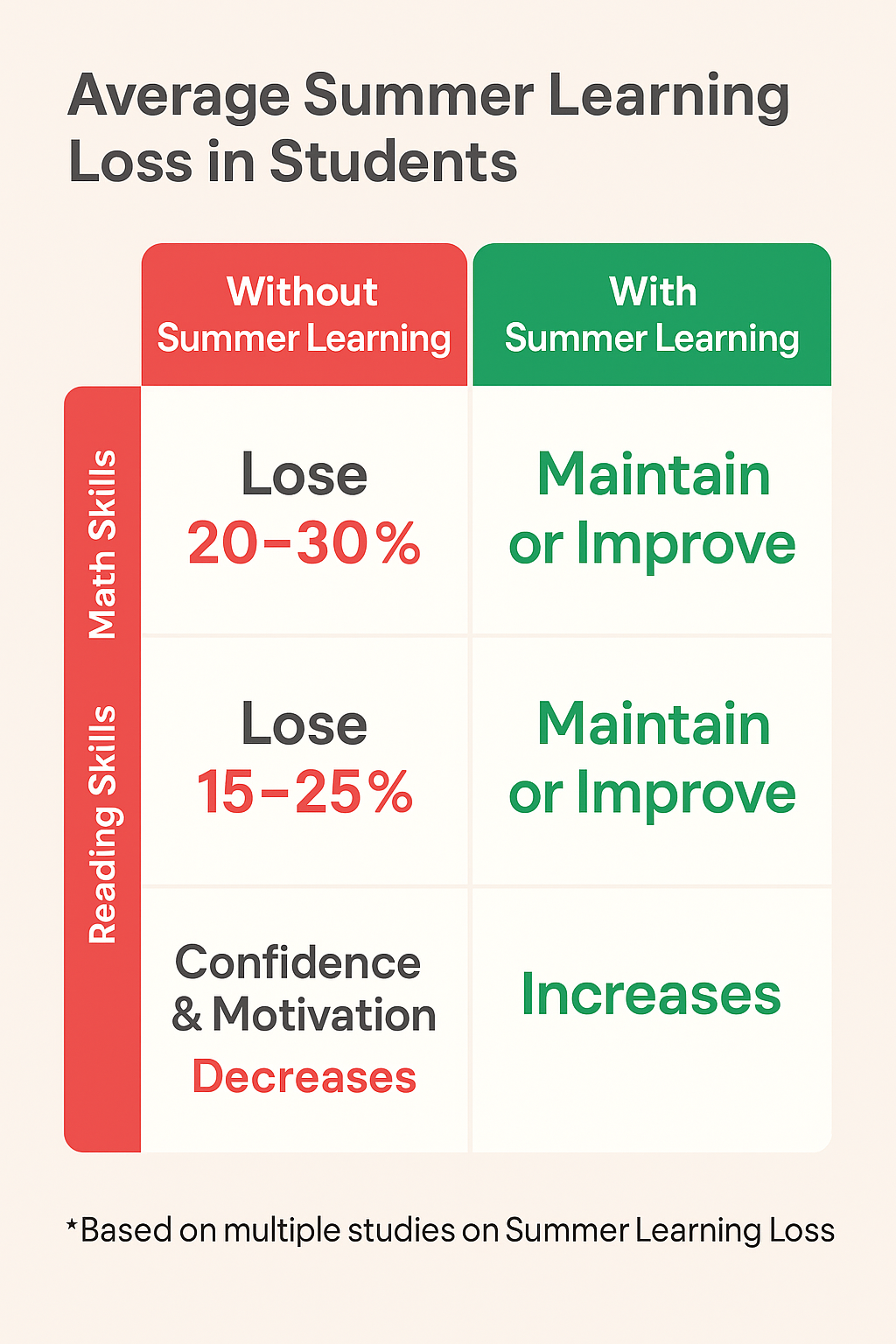
- Students can lose roughly 20–30% of school-year gains in math during the summer.
- Reading skills also decline—typically 15–25%—but outcomes vary by access to books and opportunities to read.
- Younger students (Grades 1–6) are most vulnerable because they are still building core foundations.
When school resumes, many teachers spend 4–6 weeks reteaching earlier material. That means children may fall behind—not due to poor learning earlier, but because the brain benefits from regular practice.
Quick takeaway: Preventing even a small amount of skill loss saves time, stress, and confidence in the fall.
7 Practical Ways to Prevent Summer Learning Loss
1. Create a Gentle Learning Routine
Why it matters: Kids thrive on predictability—even during breaks. A low-pressure routine keeps skills fresh without stealing the fun from summer.
Practical steps:
- Block out 30–45 minutes on weekdays for focused learning (mornings often work best when kids are rested).
- Rotate activities: math warmups 2 days, reading 2 days, creative writing 1 day. Variety keeps engagement high.
- Use a printable weekly planner or a whiteboard checklist so children can mark progress themselves—this builds ownership.
Example schedule: 8:30–9:00 AM — math game; 1:00–1:30 PM — reading or audiobook; Friday — creative writing prompt and show-and-tell.
Make it playful: use erasable notebooks, stickers for milestones, or a “learning coin” system to trade for a small privilege.
2. Involve Kids in Real-World Math
Why it matters: Real-world tasks show the purpose of math and strengthen number sense more effectively than rote drills.
- Cooking: Ask kids to double or halve recipes, measure ingredients, and convert units.
- Shopping: Give a small budget and ask them to compare prices, calculate totals, and figure out change.
- Trips: Have them estimate travel time, calculate distance, or work out gas costs.
Make it a game: Create “Math Missions”—e.g., “Save $5 by finding the best deals” or “Predict the total bill within $2.”

3. Encourage Reading for Pleasure
Why it matters: Reading maintains vocabulary, comprehension, and imagination—and it’s most effective when it’s chosen by the child.
- Let children select books freely—graphic novels, nonfiction, and magazines all count.
- Set up a cozy reading nook and a family reading hour to model reading as enjoyable.
- Pair books with activities—after a book about wildlife, visit a nature center or create a nature scavenger hunt.
Small wins: Try a summer reading challenge with weekly goals (e.g., 20 minutes/day or 3 books/week) and celebrate completion with a simple reward.
4. Use Travel as a Learning Opportunity
Why it matters: Vacations and day trips naturally spark curiosity—use them to strengthen research, geography, and writing skills.
- Ask children to research the destination: history, language, currency, and local food.
- Keep a travel journal: encourage daily entries, drawings, and glued mementos (tickets, brochures).
- Teach map-reading—have kids track routes, calculate distances, and estimate arrival times.
If travel isn’t possible, try virtual field trips. Many museums and science centers offer online tours and interactive activities.
5. Join a Summer Learning Program
Why it matters: Well-designed summer programs combine focused skill practice with creativity and social interaction—keeping learning active without pressure.
What to look for: Small group sizes, a balance of STEM and arts, and teachers who build confidence alongside skills.
If you’re exploring options, see OakLearning Center’s Summer Courses—they blend math and reading support with hands-on STEM and creative projects. Oak also provides online OSSD-aligned study materials for families who need flexibility.
6. Embrace Interactive Online Learning
Why it matters: Screens are part of modern life—choose tools that are adaptive, interactive, and short-burst.
- Pick platforms that adapt to the child’s level and give immediate feedback.
- Set clear screen-time boundaries and pair digital practice with an offline follow-up (write a short summary, draw, or teach someone).
- Short, focused practice—15–20 minutes a day—can preserve core skills.
7. Let Kids Be the Teacher
Why it matters: Teaching is a powerful way to consolidate learning. When kids explain a concept, they organize thoughts and fix gaps.
- Ask your child to teach you a math trick or summarize a book chapter.
- Encourage them to present a mini-lesson to siblings or record a short video lesson.
- Use props, drawings, or simple slides to make the teaching moment creative and fun.
What Parents and Teachers Are Saying
“Last summer, my daughter forgot so much multiplication that we had to do nightly drills in September. This year, we joined a half-day summer program—and what a difference! She started Grade 4 strong and stress-free.” — Neha, Parent, Mississauga
“By the first week of school, I can always tell which kids stayed mentally active during summer. Even a little reading or structure makes a huge difference in math fluency and focus.” — Mrs. Clark, Grade 6 Teacher, Toronto
Looking for Support? OakLearning Center Can Help
If you’re worried your child might lose momentum this summer, OakLearning Center offers a range of options:
- Magic Power of Summer Courses — academic + creative learning designed by educators.
- Online OSSD study materials — flexible resources for on-the-go families.
- OakLearning Center programs — year-round enrichment tailored to different learning styles.
Programs focus on low-pressure skill building, hands-on STEM, creative writing, and literacy—helping children return to school confident and ready.
FAQs About Summer Learning Loss
Q: How much learning do kids lose during summer?
A: Students typically lose 2–3 months of math skills and 1–2 months of reading comprehension without practice—though results vary by access to books, activities, and programs.
Q: What ages are most affected?
A: Elementary and early middle school students are most vulnerable because they rely heavily on repetition to build foundational skills.
Q: How can I help if we’re traveling or short on time?
A: Use bite-sized activities—daily reading, travel journaling, quick math games, and conversation-based learning. Even 15–30 minutes a day helps.
Q: Shouldn’t summer be just for fun?
A: Yes—kids need rest and play. The goal is balance: keep learning light, playful, and connected to real life so that fall transition is smoother.
Final Thoughts
Summer doesn’t have to be a choice between fun and learning—you can have both. Simple routines, curiosity-driven activities, and targeted programs help children return to school confident and engaged.
If you want a gentle, supportive option to keep skills fresh, consider exploring OakLearning Center’s Summer Courses or visiting the OakLearning Center homepage to learn more.